Accelerating Diffusers and xDiT Image Generation with MXFP4 using AMD Quark on AMD Instinct™ MI350 GPUs#
Diffusion models such as Black Forest Labs’ FLUX.1-dev [1] deliver stunning image quality but demand significant compute and memory bandwidth at inference time. To reduce inference cost without sacrificing image quality, precision-aware quantization techniques have become a critical optimization strategy.
In this blog, we demonstrate how AMD Quark [2], a high-performance quantization library optimized for AMD Instinct™ MI350 GPUs, enables MXFP4 quantization for Diffusers [5] and xDiT [3] FLUX.1-dev image generation. Starting from BF16 eager and torch.compile baselines, we apply Quark native inference with AITER [4] GEMM kernels and show that MXFP4 ASM with torch.compile reaches 1.92× speedup over BF16 eager and 1.41× speedup over BF16 torch.compile, while preserving CLIP quality.
Quantization with Quark#
AMD Quark is a comprehensive cross-platform deep learning toolkit designed to simplify and enhance the quantization of deep learning models. For diffusion model quantization, Quark is tightly integrated with ROCm™ and optimized for matrix-core acceleration. It provides:
Multiple numeric formats — MXFP4, MXFP6, FP8, INT8, INT4, and more
Modular quantization flows — Post-Training Quantization (PTQ), Quantization-Aware Training (QAT), and others
Support for diffusion models — FLUX, Stable Diffusion, and large decoder-only LLMs
Native inference acceleration — via AMD AITER GEMM kernels on MI300/MI350 GPUs
Seamless integration — with inference pipelines such as Diffusers [5], vLLM, and SGLang
With Quark, users can configure per-layer quantization schemes based on layer sensitivity, enabling both uniform and mixed-precision flows. By combining this flexibility with the native FP4/FP8 matrix-core capabilities of MI350 GPUs, Quark achieves near-lossless image quality while significantly improving inference efficiency.
Quark provides online quantization for xDiT to make inference more efficient. xDiT is a parallel inference engine for diffusion transformers — it shards and executes a model like FLUX.1-dev across one or more GPUs. Quark plugs into that pipeline at load time: it converts the BF16 transformer’s linear layers into FP8 or MXFP4 in-memory and routes the resulting GEMMs to native AITER matrix-core kernels on MI300 / MI350 GPUs — with no offline checkpoint conversion required.
How Quark Fits into the xDiT Stack#
The diagram below shows where Quark sits inside the xDiT inference stack:
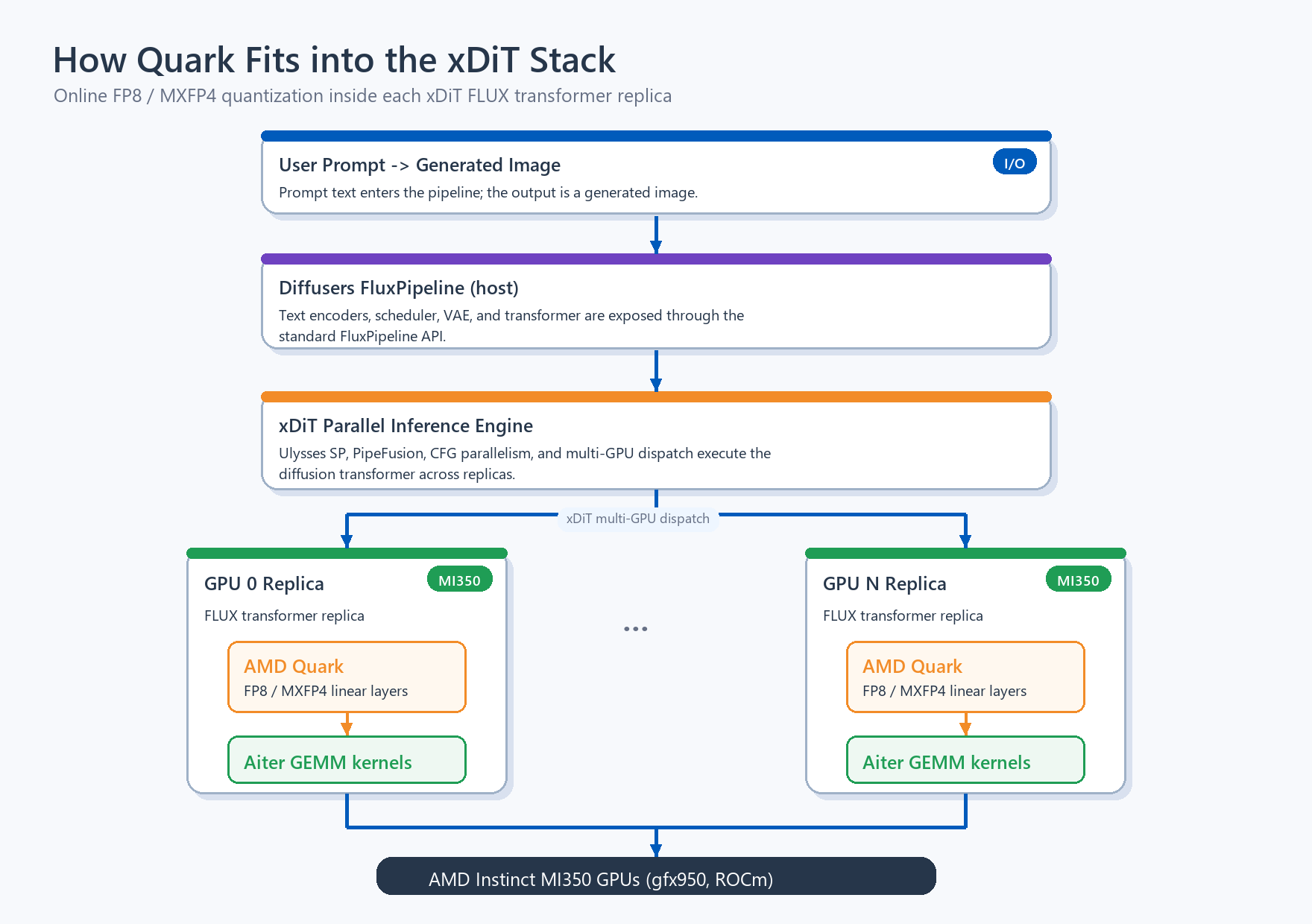
Diffusers exposes the standard FluxPipeline API, xDiT parallelizes the transformer across GPUs, and Quark online-quantizes each replica’s linear layers to FP8 / MXFP4 so they execute on AITER’s matrix-core GEMM kernels. The benchmarks in the rest of this blog measure the impact of this innermost swap — Quark-quantized linear layers — with the xDiT and Diffusers layers unchanged.
Preparation#
Environment#
Component |
Version / Image |
|---|---|
Hardware |
AMD Instinct™ MI350 (gfx950) |
Docker |
|
Quark Release |
0.12 |
PyTorch |
|
AITER |
|
Model |
|
Resolution |
1024 × 768, 20 inference steps, |
Docker Setup#
docker run -it \
    --cap-add=SYS_PTRACE \
    --security-opt seccomp=unconfined \
    --user root \
    --device=/dev/kfd --device=/dev/dri --device=/dev/mem \
    --group-add video \
    --ipc=host --network host --privileged \
    --shm-size 128G \
    --name flux_benchmark \
    -e HSA_NO_SCRATCH_RECLAIM=1 \
    -e CUDA_VISIBLE_DEVICES=0 \
    -v /shareddata/:/data \
    -v /home/$USER:/workspace \
    -w /workspace \
    rocm/pytorch-xdit:v26.5
Install Dependencies (inside container)#
apt-get update && apt-get install -y nano python3-tk

pip install torchmetrics transformers hpsv2 open_clip_torch pycocotools

# Install Quark from source (main branch)
cd /workspace
git clone https://github.com/amd/quark.git Quark && cd Quark
pip install -e .

# Verify GPU & AITER
rocm-smi --showproductname
python3 -c "import torch; print(torch.cuda.get_device_name(0))"
python3 -c "import aiter; print('AITER OK')"
BF16 Baseline#
BF16 (bfloat16) serves as the unquantized baseline configuration. It loads and runs the FLUX.1-dev model as-is in 16-bit floating point. No quantization is applied.
Benchmark Script#
import torch
from diffusers import FluxPipeline

pipe = FluxPipeline.from_pretrained(
    "/data/black-forest-labs/FLUX.1-dev",
    torch_dtype=torch.bfloat16,
).to("cuda")

prompt = "A photo of a cat sitting on a windowsill at sunset"
for _ in range(3):  # warmup
    pipe(prompt, height=768, width=1024, num_inference_steps=20, guidance_scale=3.5)

import time
latencies = []
for _ in range(10):
    t0 = time.time()
    pipe(prompt, height=768, width=1024, num_inference_steps=20, guidance_scale=3.5)
    latencies.append(time.time() - t0)
print(f"BF16 Mean latency: {sum(latencies)/len(latencies):.3f} s/img")
MXFP4 Quantization#
MXFP4, defined as part of the OCP Microscaling (MX) specification [6], groups 32 elements of 4-bit floating-point values to share a common E8M0 scaling exponent. Because it uses block-level scaling with FP4 elements, MXFP4 enables substantial model compression while retaining sufficient dynamic range for diffusion-model inference.
Supported natively on AMD Instinct™ MI350 and newer GPUs, MXFP4 delivers the strongest efficiency gains among all supported formats tested in this blog, achieving up to 1.92× speedup over the BF16 eager baseline and 1.41× speedup over BF16 torch.compile when combined with the in-tree torch.compile fix that landed on Quark main.
MXFP4 Quantization & Benchmark Script#
import torch
from diffusers import FluxPipeline
from quark.torch.quantization.api import ModelQuantizer, RuntimeOptions
from quark.torch.quantization.config.config import (
    QConfig, QLayerConfig, OCP_MXFP4Spec,
)

pipe = FluxPipeline.from_pretrained(
    "/data/black-forest-labs/FLUX.1-dev",
    torch_dtype=torch.bfloat16,
).to("cuda")

# Configure MXFP4 quantization with 32-element block scaling
weight_spec = OCP_MXFP4Spec(ch_axis=-1, is_dynamic=False).to_quantization_spec()
input_spec  = OCP_MXFP4Spec(ch_axis=-1, is_dynamic=True).to_quantization_spec()
layer_config = QLayerConfig(weight=weight_spec, input_tensors=input_spec)

quantizer = ModelQuantizer(QConfig(global_quant_config=layer_config))
pipe.transformer = quantizer.quantize_model(pipe.transformer)

# Freeze model with MXFP4 native inference (AITER FP4 GEMM kernels)
runtime_opts = RuntimeOptions(native_linear_mode="mxfp4")
pipe.transformer = ModelQuantizer.freeze(
    pipe.transformer, runtime_options=runtime_opts,
)

# Benchmark
prompt = "A photo of a cat sitting on a windowsill at sunset"
for _ in range(3):
    pipe(prompt, height=768, width=1024, num_inference_steps=20, guidance_scale=3.5)

import time
latencies = []
for _ in range(10):
    t0 = time.time()
    pipe(prompt, height=768, width=1024, num_inference_steps=20, guidance_scale=3.5)
    latencies.append(time.time() - t0)
print(f"MXFP4 Mean latency: {sum(latencies)/len(latencies):.3f} s/img")
MXFP4 Kernel#
On Quark main, the MXFP4 native linear uses AITER’s ASM GEMM path by default: per_1x32_f4_quant_hip for activation quantization plus gemm_a4w4 with bpreshuffle=True, with a dequantization and matrix-multiply fallback for small-K layers. No user flag is needed. Instantiating RuntimeOptions(native_linear_mode="mxfp4") selects ASM automatically.
Path |
Activation Quantization |
GEMM Kernel |
Eager Latency |
|
|---|---|---|---|---|
ASM (default) |
|
|
1.779 s |
1.069 s |
Quality Evaluation#
Image quality is evaluated with CLIP Score [7], a text-image alignment metric where higher is better, on 100 COCO 2017 [8] caption prompts. We report results with openai/clip-vit-base-patch16, where FLUX scores land in the 30-32 range typical of FLUX papers.
Evaluation Script#
The CLIP evaluation helper is available as eval_clip.py.
python3 eval_clip.py \
    --image_dir <OUTPUT_DIR>/images \
    --output_dir <OUTPUT_DIR>/clip \
    --coco_annotations /data/coco/annotations/captions_val2017.json \
    --num_prompts 100 \
    --model_name openai/clip-vit-base-patch16
Switch backbones via --model_name, for example openai/clip-vit-large-patch14. Any Hugging Face CLIP ID is accepted.
Quality Results#
Configuration |
CLIP (ViT-B/16) ↑ |
|---|---|
BF16 Eager (Baseline) |
30.98 |
BF16 |
31.38 |
MXFP4 ASM Eager |
31.69 |
MXFP4 ASM |
31.84 |
↑ = indicates higher is better
All quantized configurations preserve CLIP quality within the per-configuration noise floor of ±0.5 absolute points on 100 samples. MXFP4 ASM matches or slightly exceeds BF16, and torch.compile does not regress quality on any path.
Sample Images#
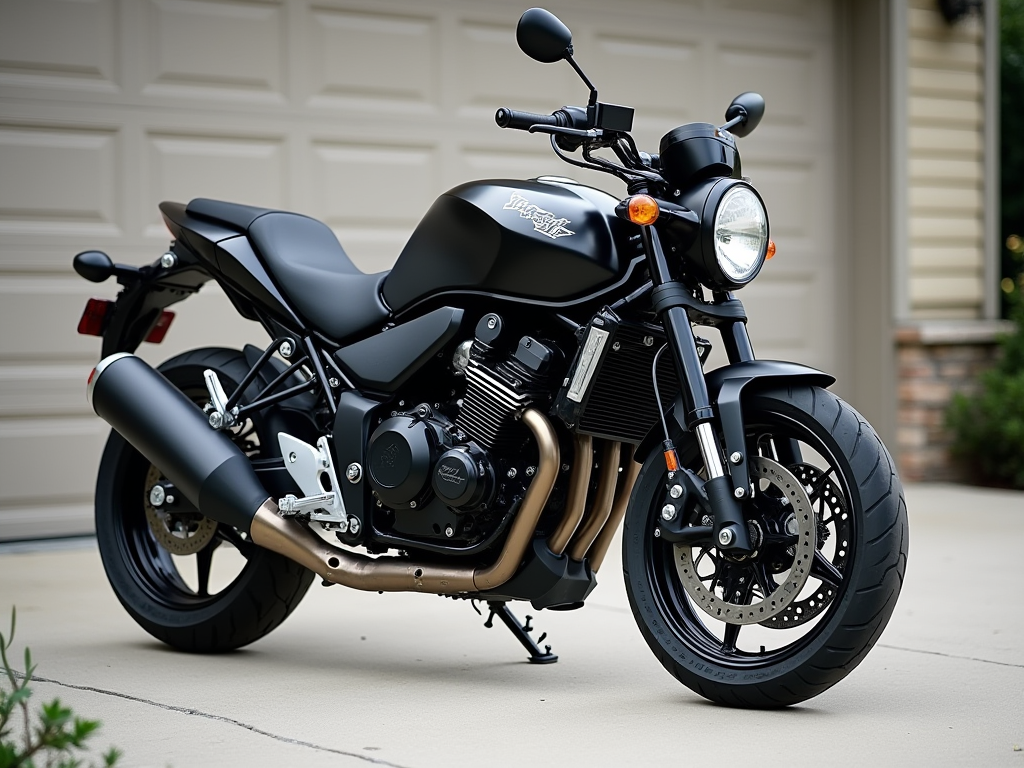
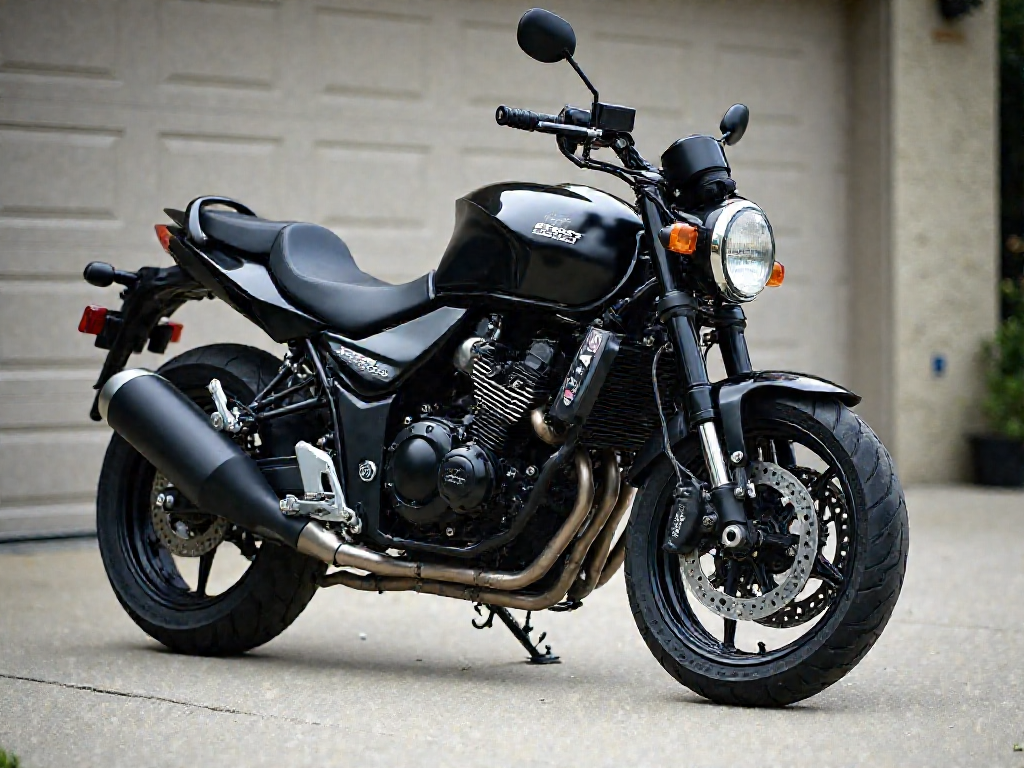
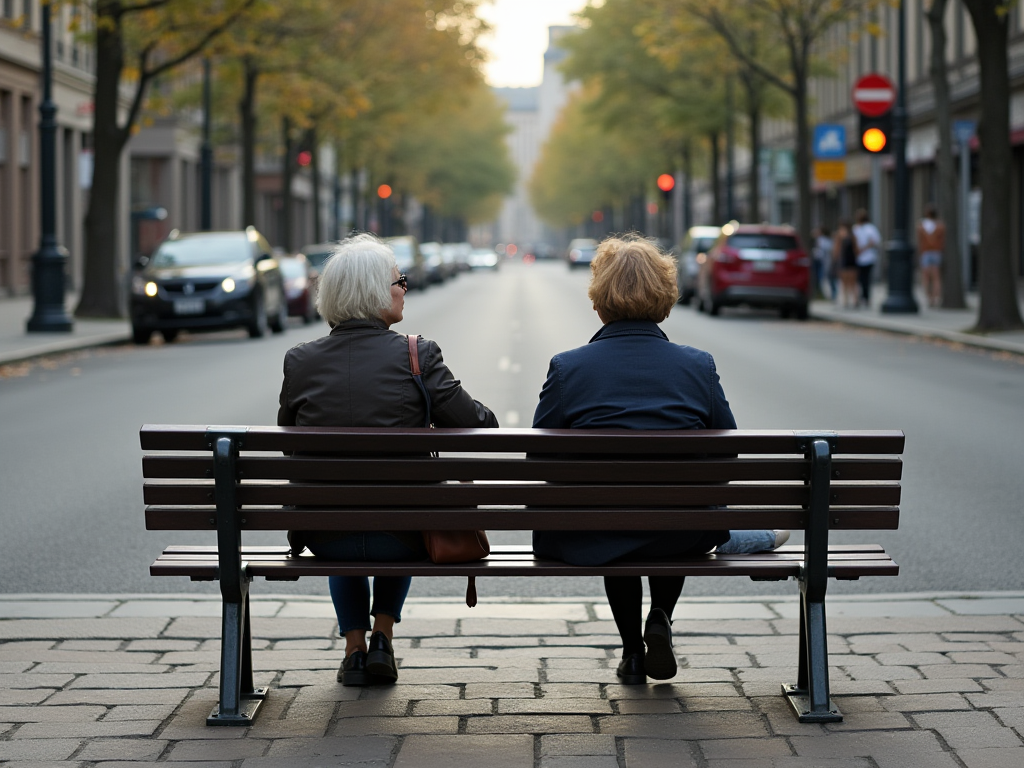
The samples below compare BF16 against MXFP4 ASM for the same prompt and seed. Prompt 1 is “A black Honda motorcycle parked in front of a garage.” Prompt 2 is “Two women waiting at a bench next to a street.”
Prompt |
BF16 |
MXFP4 ASM |
|---|---|---|
1 |
|
|
2 |
|
|

Performance Uplift#
All latency measurements were collected on a single AMD Instinct™ MI350 (gfx950) GPU running FLUX.1-dev at 1024×768, 20 inference steps, averaged over 100 COCO captions.
Latency Comparison#
Configuration |
Latency (s/img) ↓ |
Speedup vs BF16 eager ↑ |
|---|---|---|
BF16 Eager (Baseline) |
2.054 |
1.00× |
MXFP4 ASM Eager |
1.779 |
1.15× |
BF16 |
1.506 |
1.36× |
MXFP4 ASM |
1.069 |
1.92× |
↓ = indicates lower is better, ↑ = indicates higher is better
Eager Performance Chart#
Speedup vs BF16 eager (higher is better)
━━━━━━━━━━━━━━━━━━━━━━━━━━━━━━━━━━━━━━━━━━━━━━━━━━━━━━━━━━━━━━━━━━━━━━━
BF16 Eager (baseline)   ████████████████████                  1.00× (2.054s)
MXFP4 ASM Eager         ███████████████████████               1.15× (1.779s)
torch.compile Performance Chart#
Speedup vs BF16 torch.compile (higher is better)
━━━━━━━━━━━━━━━━━━━━━━━━━━━━━━━━━━━━━━━━━━━━━━━━━━━━━━━━━━━━━━━━━━━━━━━
BF16 torch.compile      ████████████████████                  1.00× (1.506s)
MXFP4 ASM Compiled      ████████████████████████████          1.41× (1.069s)
Key Takeaways#
In eager mode, MXFP4 ASM is faster than BF16 eager, reaching 1.15× speedup at 1.779 s/img.
In
torch.compilemode, MXFP4 ASM is 1.41× faster than BF16torch.compile, reducing latency from 1.506 s/img to 1.069 s/img. This is the clean same-mode comparison enabled by the in-tree opaque-op fix on Quarkmain.MXFP4 ASM with
torch.compileis still 1.92× faster than BF16 eager overall, making it the fastest configuration tested. This end-to-end view combines the benefits of low-precision GEMMs with compiler fusion around the BF16 operations.
xFuser Multi-GPU Benchmarks#
We also tested Quark MXFP4 with xFuser’s Ulysses parallelism on multiple AMD Instinct™ MI350 GPUs. This path is useful when a model or workload requires multiple GPUs. At 1024×768 with 20 inference steps, the latest 2-GPU batch sweep shows that MXFP4 improves throughput by about 1.21× to 1.23× over BF16 with torch.compile(mode="reduce-overhead").
2-GPU Ulysses Benchmark#
2-GPU Benchmark Script#
The 2-GPU benchmark uses xFuser’s runner directly under torchrun. The core flow is shown below; rank 0 reports the average per-image latency after warmup.
Save the benchmark as a local Python script, then launch it with two visible GPUs:
SCRIPT=/path/to/your_2gpu_xdit_benchmark.py

CUDA_VISIBLE_DEVICES=0,1 HIP_VISIBLE_DEVICES=0,1 \
PRECISION=mxfp4 \
BATCH_SIZE=16 \
torchrun --nproc_per_node 2 --master_port 29541 "$SCRIPT"
Use PRECISION=bf16 for the BF16 baseline and PRECISION=mxfp4 for the Quark MXFP4 run. Set BATCH_SIZE=4, 8, or 16 to reproduce the table rows.
import os
import time

import torch
from xfuser.runner import xFuserModelRunner

from quark.torch.quantization.api import ModelQuantizer
from quark.torch.quantization.config.config import QConfig, QLayerConfig, OCP_MXFP4Spec
from quark.torch.quantization.utils import RuntimeOptions


PROMPTS = [
    "A photo of a city skyline at sunset with vivid orange and purple clouds",
    "A close-up portrait of a tabby cat sitting on a wooden windowsill",
    "An astronaut riding a horse through a snowy mountain pass at dawn",
]


def apply_mxfp4(transformer):
    spec = OCP_MXFP4Spec(ch_axis=-1, is_dynamic=True).to_quantization_spec()
    layer_config = QLayerConfig(weight=spec, input_tensors=spec)
    quantizer = ModelQuantizer(QConfig(global_quant_config=layer_config))
    transformer = quantizer.quantize_model(transformer)
    return quantizer.freeze(
        transformer,
        runtime_options=RuntimeOptions(native_linear_mode="mxfp4"),
    )


def compile_transformer_blocks(transformer):
    for i, block in enumerate(transformer.transformer_blocks):
        transformer.transformer_blocks[i] = torch.compile(block, mode="reduce-overhead", fullgraph=False)
    for i, block in enumerate(transformer.single_transformer_blocks):
        transformer.single_transformer_blocks[i] = torch.compile(block, mode="reduce-overhead", fullgraph=False)


def make_prompt_batch(batch_size, offset=0):
    return [PROMPTS[(offset + i) % len(PROMPTS)] for i in range(batch_size)]


def run_benchmark(precision="mxfp4", batch_size=16, warmup=2, num_iterations=6):
    config = {
        "model": "black-forest-labs/FLUX.1-dev",
        "height": 768,
        "width": 1024,
        "num_inference_steps": 20,
        "guidance_scale": 3.5,
        "max_sequence_length": 512,
        "ulysses_degree": 2,
        "ring_degree": 1,
        "output_directory": f"/tmp/flux_2gpu_{precision}",
        "warmup_calls": 0,
        "num_iterations": 1,
        "use_torch_compile": False,
        "seed": 42,
    }

    runner = xFuserModelRunner(config)
    input_args = runner.preprocess_args(config)
    runner.initialize(input_args)
    pipe = runner.model.pipe

    if precision == "mxfp4":
        pipe.transformer = apply_mxfp4(pipe.transformer)

    torch._inductor.config.reorder_for_compute_comm_overlap = True
    compile_transformer_blocks(pipe.transformer)

    for i in range(warmup):
        torch.compiler.cudagraph_mark_step_begin()
        runner.model._run_pipe({**input_args, "prompt": make_prompt_batch(batch_size, i)})
        torch.cuda.synchronize()

    timings = []
    for i in range(num_iterations):
        torch.cuda.synchronize()
        torch.compiler.cudagraph_mark_step_begin()
        start = time.perf_counter()
        runner.model._run_pipe({**input_args, "prompt": make_prompt_batch(batch_size, i)})
        torch.cuda.synchronize()
        timings.append(time.perf_counter() - start)

    if int(os.environ.get("RANK", 0)) == 0:
        time_per_iteration = sum(timings) / len(timings)
        print(f"{precision} batch {batch_size}: {time_per_iteration:.3f} s/iteration, {time_per_iteration / batch_size:.3f} s/img")

    runner.cleanup()


if __name__ == "__main__":
    run_benchmark(
        precision=os.environ.get("PRECISION", "mxfp4"),
        batch_size=int(os.environ.get("BATCH_SIZE", "16")),
    )
The blocks_only compile scope compiles the 19 dual transformer blocks and 38 single transformer blocks while leaving xFuser’s top-level wrappers in eager mode. This avoids tracing xFuser’s collective communication wrappers into the compiled graph.
2-GPU Performance Comparison#
The table below reports a 2-GPU Ulysses batch sweep on dual MI350 GPUs using blocks_only torch.compile(mode="reduce-overhead"), 6 timed iterations after 2 warmup iterations, and the same FLUX.1-dev settings used above.
Precision |
Batch |
time(s) / iteration ↓ |
time(s) / img ↓ |
vs BF16 |
|---|---|---|---|---|
BF16 |
4 |
4.488 |
1.122 |
1.00× |
BF16 |
8 |
8.502 |
1.063 |
1.00× |
BF16 |
16 |
16.826 |
1.052 |
1.00× |
MXFP4 |
4 |
3.666 |
0.916 |
1.22× |
MXFP4 |
8 |
7.004 |
0.876 |
1.21× |
MXFP4 |
16 |
13.682 |
0.855 |
1.23× |
MXFP4 reaches the best 2-GPU result at batch 16: 0.855 s/img, a 1.23× throughput uplift over BF16 at the same batch size.
Summary#
This blog provides a practical, step-by-step guide to quantizing and accelerating FLUX.1-dev image generation using AMD Quark on AMD Instinct™ MI350 GPUs. On a single GPU, MXFP4 ASM with torch.compile delivers up to 1.92× speedup over BF16 eager (1.069 s/img), and is also 1.41× faster than BF16 torch.compile, with CLIP quality matching or exceeding BF16 on both ViT-L/14 and ViT-B/16 backbones. On the 2-GPU xFuser Ulysses path, MXFP4 with torch.compile(mode="reduce-overhead") reaches 0.855 s/img at batch 16, a 1.23× uplift over the BF16 2-GPU baseline.
By combining Quark’s flexible quantization workflows with the native FP4 matrix-core capabilities of MI350-class GPUs and the torch.compile-compatible MXFP4 ASM path on Quark main, developers can efficiently deploy diffusion models with significantly lower latency and reduced memory footprint while maintaining near-lossless image quality.
Acknowledgements#
The authors wish to thank the AMD Quark and AITER teams for their invaluable guidance and support in enabling MXFP4 GEMM kernels on AMD Instinct™ MI350 GPUs.
References#
[1] FLUX.1-dev — Black Forest Labs’ open-weights diffusion transformer for text-to-image generation
[2] AMD Quark — A cross-platform deep learning quantization toolkit
[3] xDiT — Inference engine for diffusion transformers with parallelism support
[4] AITER — AI Tensor Engine for ROCm
[5] Diffusers — Hugging Face library for state-of-the-art diffusion models
[6] OCP Microscaling Formats (MX) Specification — Open Compute Project standard for block-scaled low-precision formats
[7] CLIP Score — Text-image alignment metric based on OpenAI’s CLIP model
[8] COCO 2017 — Common Objects in Context image-caption dataset
Disclaimers#
Third-party content is licensed to you directly by the third party that owns the content and is not licensed to you by AMD. ALL LINKED THIRD-PARTY CONTENT IS PROVIDED “AS IS” WITHOUT A WARRANTY OF ANY KIND. USE OF SUCH THIRD-PARTY CONTENT IS DONE AT YOUR SOLE DISCRETION AND UNDER NO CIRCUMSTANCES WILL AMD BE LIABLE TO YOU FOR ANY THIRD-PARTY CONTENT. YOU ASSUME ALL RISK AND ARE SOLELY RESPONSIBLE FOR ANY DAMAGES THAT MAY ARISE FROM YOUR USE OF THIRD-PARTY CONTENT.
The information presented in this document is for informational purposes only and may contain technical inaccuracies, omissions, and typographical errors. The information contained herein is subject to change and may be rendered inaccurate for many reasons, including but not limited to product and roadmap changes, component and motherboard version changes, new model and/or product releases, product differences between differing manufacturers, software changes, BIOS flashes, firmware upgrades, or the like. Any computer system has risks of security vulnerabilities that cannot be completely prevented or mitigated. AMD assumes no obligation to update or otherwise correct or revise this information.
However, AMD reserves the right to revise this information and to make changes from time to time to the content hereof without obligation of AMD to notify any person of such revisions or changes.
THIS INFORMATION IS PROVIDED “AS IS.” AMD MAKES NO REPRESENTATIONS OR WARRANTIES WITH RESPECT TO THE CONTENTS HEREOF AND ASSUMES NO RESPONSIBILITY FOR ANY INACCURACIES, ERRORS, OR OMISSIONS THAT MAY APPEAR IN THIS INFORMATION. AMD SPECIFICALLY DISCLAIMS ANY IMPLIED WARRANTIES OF NON-INFRINGEMENT, MERCHANTABILITY, OR FITNESS FOR ANY PARTICULAR PURPOSE. IN NO EVENT WILL AMD BE LIABLE TO ANY PERSON FOR ANY RELIANCE, DIRECT, INDIRECT, SPECIAL, OR OTHER CONSEQUENTIAL DAMAGES ARISING FROM THE USE OF ANY INFORMATION CONTAINED HEREIN, EVEN IF AMD IS EXPRESSLY ADVISED OF THE POSSIBILITY OF SUCH DAMAGES.
AMD, the AMD Arrow logo, ROCm, Instinct, and combinations thereof are trademarks of Advanced Micro Devices, Inc. Other product names used in this publication are for identification purposes only and may be trademarks of their respective companies. © 2026 Advanced Micro Devices, Inc. All rights reserved.