Recent Posts - Page 11#

QuickReduce FP4 Quantization and Benchmarking on MI355
Learn how QuickReduce uses FP4 quantization to accelerate all-reduce communication and evaluate its performance on AMD Instinct MI355 GPUs.

ROCm 7.13: Expanding Hardware, Tools, and Reach
Explore what's new in the ROCm 7.13 release, featuring expanded hardware support, GPU virtualization, enhanced developer tooling, and TheRock's modular packaging.

Semantic Fencing of Video Streams Using Embedding Splits from Vision Foundation Models
Learn how to semantically split vision datasets using foundation model embeddings on AMD GPUs to reduce leakage and improve evaluation.

Further Accelerating Kimi-K2.5 on AMD Instinct™ MI325X: W4A8 & W8A8 Quantization with AMD Quark
Quantize Kimi-K2.5 to W4A8 and W8A8 using AMD Quark and serve on MI325X with FlyDSL and AITER for further inference acceleration.
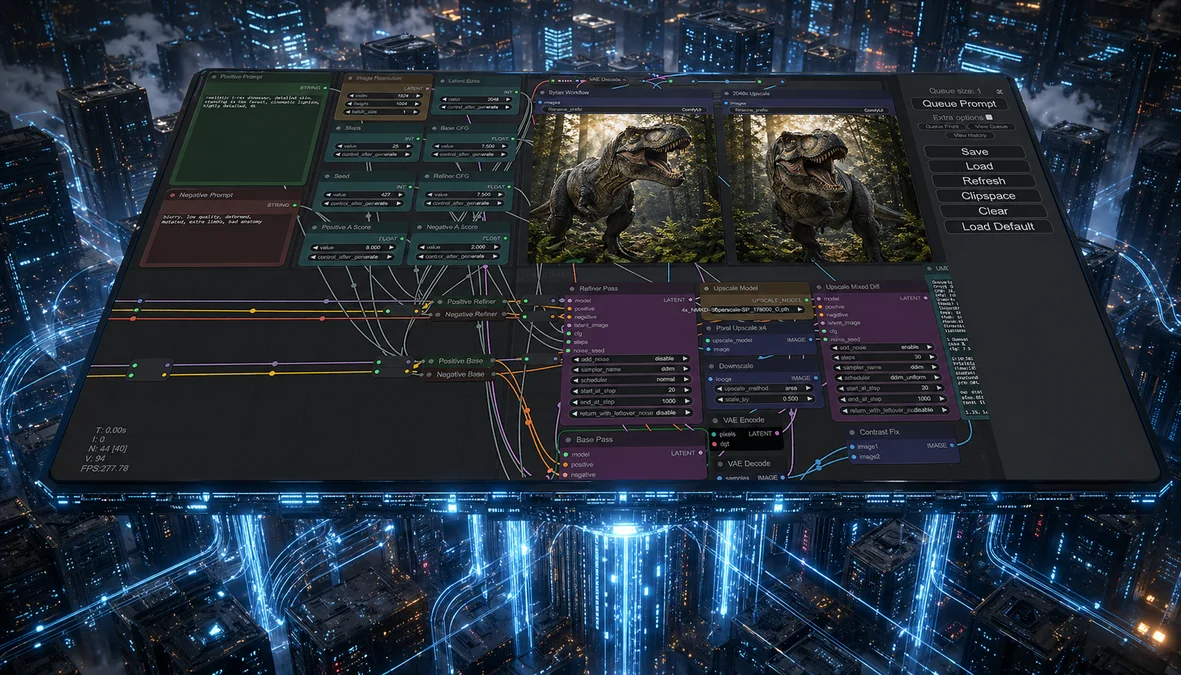
Accelerating ComfyUI Workflows on AMD Instinct™ MI355X GPUs with ROCm
We show that the MI355X delivers better performance than the B200 for ComfyUI after enabling PyTorch attention for gfx950.

vLLM-ATOM: Unlocking Native AMD Performance in the vLLM Ecosystem
Use ATOM as an out-of-tree vLLM plugin to keep vLLM compatibility while enabling AMD-optimized attention, model execution, and multi-model support including Kimi-K2.5.

AMD-Powered 3D Gaussian Splatting for Autonomous Driving Scenes
Run Street Gaussians on AMD Instinct MI300: migrate to latest gsplat, install on ROCm, and render dynamic street scenes.

Accelerating Mixture-of-Experts Execution with FarSkip-Collective Models
Explore a new MoE architecture designed for native computation-communication overlap, enabling efficient distributed execution.

TraceLens: Democratizing AI Performance Analysis
Explore how TraceLens automates profiler trace analysis to pinpoint bottlenecks and optimize AI workloads.

Primus Projection: Estimate Memory and Performance Before You Train
Learn how to use the Primus projection tool to estimate memory and performance for large-scale LLM training on AMD Instinct™ accelerator platforms.
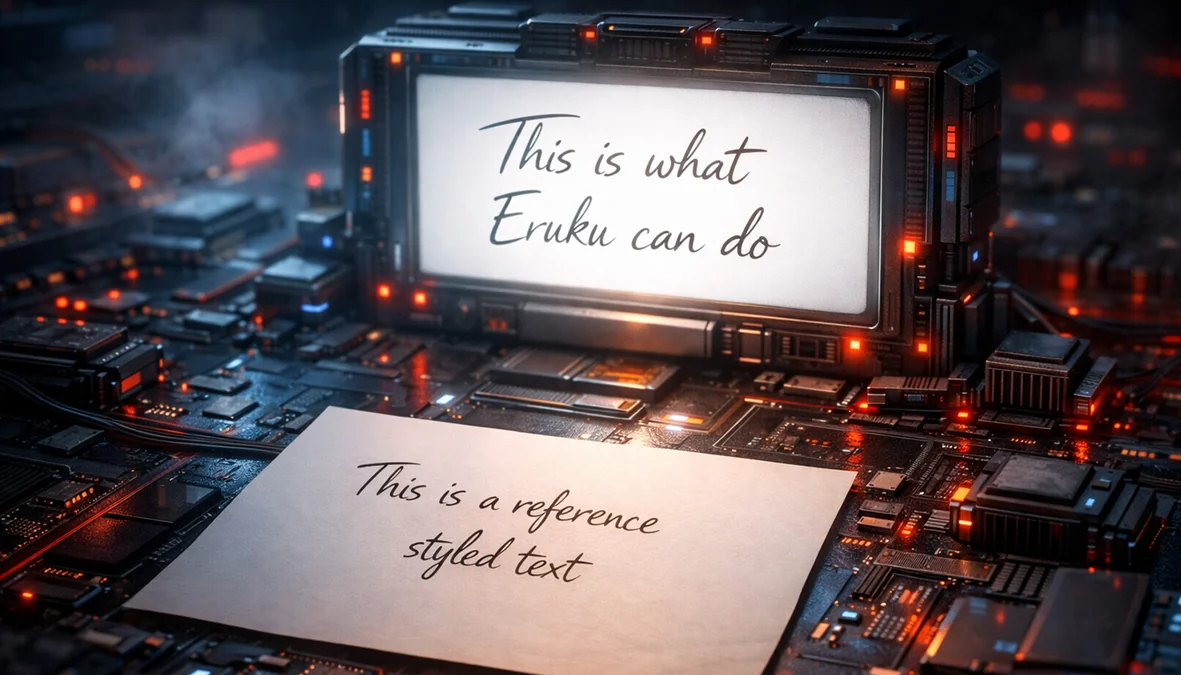
Styled Text Image Generation with Eruku on AMD
Hands-on, reproducible guide to train and run Eruku on LUMI supercomputer, powered by AMD Instinct MI250X GPUs.

Getting Started with FlyDSL Nightly Wheels on ROCm
A practical guide to installing and using FlyDSL nightly wheels on ROCm for fast, Python-native GPU kernel development