Developers Blogs - Page 4#

MXFP6 and MXFP4 Mixed Precision for Accelerating Dense LLMs on AMD Instinct MI355X
W_MXFP4_A_MXFP6 quantization on AMD Instinct MI355X improves LLM throughput and latency while recovering accuracy versus MXFP4.

A Practical Guide to Running LLMs on AMD Radeon™ GPUs
This guide describes how to run LLMs on AMD Radeon™ GPUs using a range of partner frameworks, tools, and runtimes, with step-by-step setup instructions and performance optimization tips.

Building and Deploying Custom hipBLASLt Libraries on AMD Instinct GPUs
Learn how to manage hipBLASLt environments with custom source builds, RPM/DEB packaging, and version switching on AMD Instinct GPUs.

Efficient and Portable 3D Explorable World Generation on AMD GPUs
Learn how to run Matrix3D world generation on AMD GPUs more smoothly and efficiently.
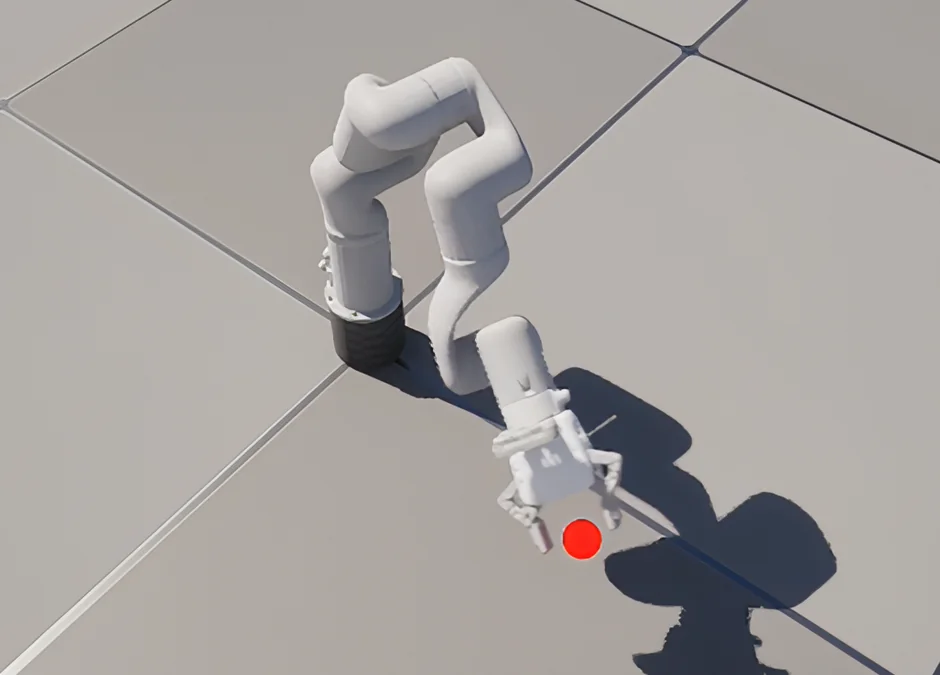
Utilizing AMD Schola and UnrealRoboticsLab with AMD ROCm™ Software to Train a Robotic Arm
Learn how to combine MuJoCo physics, Unreal Engine, and Schola to train a 6-DOF robot arm with reinforcement learning on AMD hardware.

Dropless MoE Training in JAX with Primus-Turbo
Learn how to train dropless MoE in JAX/MaxText with Primus-Turbo's grouped GEMM and DeepEP all-to-all for faster, more memory-efficient training.

Performance Profiling on AMD GPUs - Part 4: Fortran OpenMP Offload Edition
Guides developers through profiling and optimizing Fortran OpenMP GPU offload applications using ROCm tools

From Build to Benchmark: ONNX Model Serving with Triton Inference Server on AMD GPUs
Step-by-step guide to building, deploying, and benchmarking ONNX models with Triton Inference Server and MIGraphX on AMD GPUs

ROCm 7.13: Expanding Hardware, Tools, and Reach
Explore what's new in the ROCm 7.13 release, featuring expanded hardware support, GPU virtualization, enhanced developer tooling, and TheRock's modular packaging.

vLLM-ATOM: Unlocking Native AMD Performance in the vLLM Ecosystem
Use ATOM as an out-of-tree vLLM plugin to keep vLLM compatibility while enabling AMD-optimized attention, model execution, and multi-model support including Kimi-K2.5.

Primus Projection: Estimate Memory and Performance Before You Train
Learn how to use the Primus projection tool to estimate memory and performance for large-scale LLM training on AMD Instinct™ accelerator platforms.

Getting Started with FlyDSL Nightly Wheels on ROCm
A practical guide to installing and using FlyDSL nightly wheels on ROCm for fast, Python-native GPU kernel development